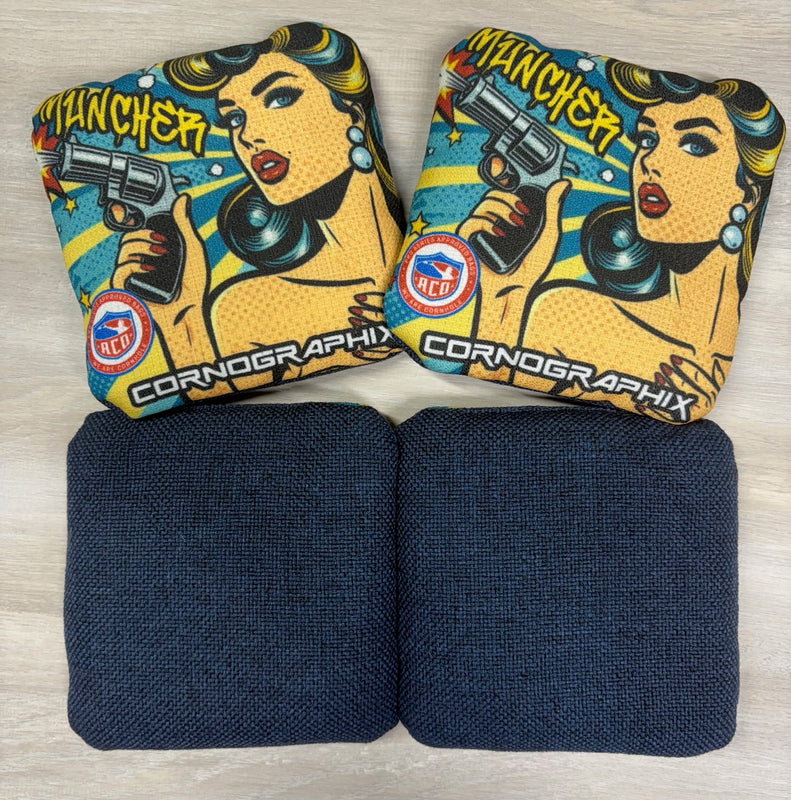
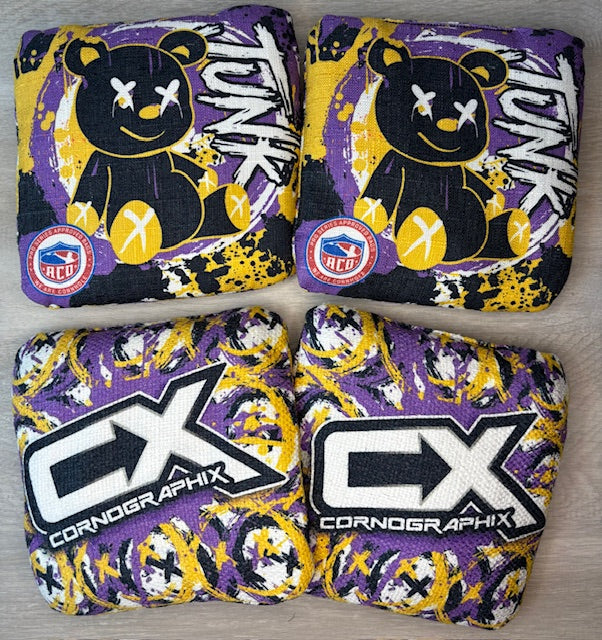
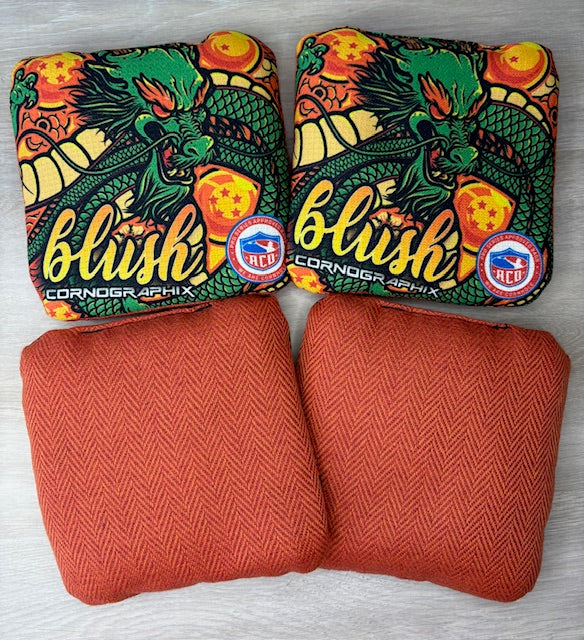
Most players spend all their mental energy thinking about the fast side. Makes sense — it's the side that slides, the side that scores. But if you've ever lost a game because your blocker moved when it shouldn't have, or your bump shot rolled through a gap it had no business rolling through, that's a slow side problem. And slow side fabric is where games are actually won.
The two main slow side fabrics in tournament cornhole are herringbone carpet and suede. They look similar in photos. In play, they behave very differently. Here's exactly what separates them and when each one gives you an edge.
What Herringbone Carpet Actually Does
Carpet slow side fabric has a woven, textured surface — the herringbone weave creates micro-ridges that grip the board on contact. When a carpet-side bag lands, it bites the surface and stays. There's almost no roll-through, minimal shuffle, and very little bag movement after initial contact.
That grip is the whole point. Carpet slow sides are built for blockers that stay put. You land a bag on the board in the blocking position, and it doesn't drift. Your opponent has to physically move it or throw around it. In a tight game where real estate matters, a bag that doesn't budge is a weapon.
The grip also changes how your bag handles incoming contact. When an opponent's bag hits a carpet-side blocker, the blocker absorbs the impact and resists being pushed. It takes a more direct shot or significantly higher speed to move a carpet bag off a well-placed position. That's the physics of textured fabric doing its job.
Carpet slow sides play even stickier in humid or damp conditions. If you're playing outdoor summer tournaments, a carpet-side blocker in blocking position is essentially an anchor. Nothing is moving it without a direct hit.
What Suede Does Differently
Suede is a smoother surface. It still grips — it's still the slow side — but the contact is softer. When a suede-side bag lands, it decelerates quickly but without the hard stop of carpet. There's a small amount of controlled movement after landing: a slight settle, sometimes a short roll toward a natural resting position.
For most players, this feels more forgiving. If your shot lands slightly long or short, a suede bag has a small window to correct itself. That forgiveness can be the difference between a bag that stops on the board versus one that keeps going.
Suede also interacts differently with incoming contact. When an opponent's bag hits a suede blocker, there's more transfer of energy — the blocker will move slightly more than a carpet bag would. In defensive play, this is a liability. But in certain offensive scenarios, it can be an asset: a suede bag positioned near the hole can be nudged in by a well-placed shot.
Shot Selection: When to Use Each Slow Side
The slow side fabric you choose should match the game situation, not just your preference.
Use Carpet Slow Side When:
- You're playing defensively and need your blockers to hold position
- The board is fast and you need guaranteed stops in scoring zones
- You're playing outdoor on a smooth lacquered board — the extra grip compensates for the slick surface
- You're protecting a lead and need consistent, predictable bag placement
Use Suede Slow Side When:
- You want slight roll-through to set up proximity shots near the hole
- You're playing on a rough or high-friction board where carpet might catch too hard and bounce
- You're playing against a blocker-heavy opponent and need your bags to reach scoring position even if the landing is slightly imperfect
- You prefer the softer feel and slightly more forgiving landing window
How Surface Conditions Affect the Choice
Board surface isn't something you control at tournaments, and it completely changes how slow side fabric performs. Fast, smooth boards amplify the difference between carpet and suede — carpet grips hard, suede has more roll. Rough or slower boards compress that difference. On a slow board, both fabrics can stop a bag effectively, and the choice comes down to personal preference and shot style.
Temperature matters too. Cold weather stiffens fabric and makes both carpet and suede grip harder. Hot weather softens the weave and can make suede feel slightly faster than its rating. If you're playing outdoor tournaments across different conditions, knowing how your slow side fabric behaves in each scenario is part of your game prep.
Check the full Cornographix bag lineup — the product pages specify slow side fabric for every bag in the range, along with speed ratings on both sides. Match the fabric to your playing style, your most common board conditions, and the game situations you're trying to win. That's how you use your slow side as a real tool instead of just the side you don't throw.
The short version: Carpet stops. Suede settles. If you play defense-first cornhole, carpet slow side is your edge. If you play placement-and-roll, suede gives you more options. Most competitive players carry both and switch by game situation.