Walk into any sanctioned cornhole tournament and you'll see it: a player who throws beautifully, consistent release, good arc, textbook follow-through — and their bag either rockets past the hole every time or dies ten inches short. Nine times out of ten, it's not technique. It's the bag.
Cornhole bag speed is one of the most misunderstood variables in the game. Most casual players ignore it entirely. Most new tournament players pick what looks cool. And a lot of intermediate players spend money on bags that fight their natural throw instead of working with it.
This guide explains exactly what bag speed means, how it's measured, and how to pick the right number for where you are right now.
What Does Bag Speed Actually Mean?
Bag speed is a measure of how far and how fast a bag slides across a cornhole board after it lands on the fast side. A high-speed bag slides aggressively — it'll keep moving after it hits the board and can slide right into the hole. A low-speed bag grips the board and stays where it lands.
Competitive cornhole uses a standardized speed chart that rates bags on a scale of roughly 1–10 across two axes: the fast side and the slow side. Most premium tournament-grade bags are rated like 6/9 or 7/9, which means the slow side is a 6 and the fast side is a 9 on that 10-point scale.
The two numbers represent the two sides of the bag — every cornhole bag is dual-fabric. One side is designed to slide (fast side), one side is designed to stop (slow side). You're always choosing which side is doing the work.
The Speed Scale Broken Down
| Speed Range | Fast Side | What It Feels Like | Best For |
|---|---|---|---|
| 1–4 | Carpet / hybrid grippers | Lands and parks. Almost no slide on any surface. | Blocking, beginners learning placement |
| 5–6 | Mid-speed dual-weave synthetic | Some movement. Controllable on most surfaces. | Recreational, backyard, mixed-level tournaments |
| 7–9 | Tournament dual-weave synthetic | Wants to move. Fast even in humid conditions. | Sanctioned tournaments, competitive players, ringers |
Your Natural Throw Matters More Than You Think
Before you look at speed ratings, think about your throw. Be honest with yourself:
- Do you throw hard and flat? You need something in the 5–6 range. A 9-speed bag will slide through every time.
- Do you throw high arc with a soft landing? You can handle 7–9. The bag needs to slide after landing, and your arc is doing the work of slowing it down.
- Do you throw sidearm or with spin? Anything above a 7 will be unpredictable until you dial it in.
The biggest error we see from new players stepping up to tournament bags: they buy a 9-speed because it sounds fast and impressive, throw it flat and hard, and watch their bags sail off the back of the board all day. That's not a skill issue — it's a mismatch.
Surface Changes Everything
Board surface affects perceived bag speed significantly. Here's the real-world breakdown:
Smooth / Lacquered Boards
Common at outdoor tournaments. Bags move faster on these — the same 7-speed bag you controlled indoors might play like an 8 or 9 out here. Consider sizing down half a step on slick outdoor surfaces.
Indoor / High-Friction Boards
Garage boards, rec center setups, most regulation indoor surfaces. More grip. A 7-speed bag will play much closer to a 6. You can go higher if you normally play indoor.
Humidity
Humidity slows boards down — the air gets thick and bags grip a touch sooner off the fast side. Every Cornographix bag runs the same dual-weave synthetic fast side, so no single bag is secretly "built for humidity" over another. Want more slide when the air's soupy? That's a fill call, not a bag call — pick your resin at checkout (The Rez, CX3, or Slip).
When to Move Up in Speed
You're ready to go faster when:
- You're consistently landing bags where you aim (not just close)
- You're playing in sanctioned tournament events regularly
- Your current bags feel "dead" — no feedback, no slide options
- You've broken in your current bags and still want more
Do not move up in speed just because your opponent is throwing a 9. Your 6 in confident hands beats their 9 when they're fighting the bag all game.
How the Cornographix Line Maps to Speed
Every bag in the lineup has a speed rating on the speed chart. A few highlights for different playing levels:
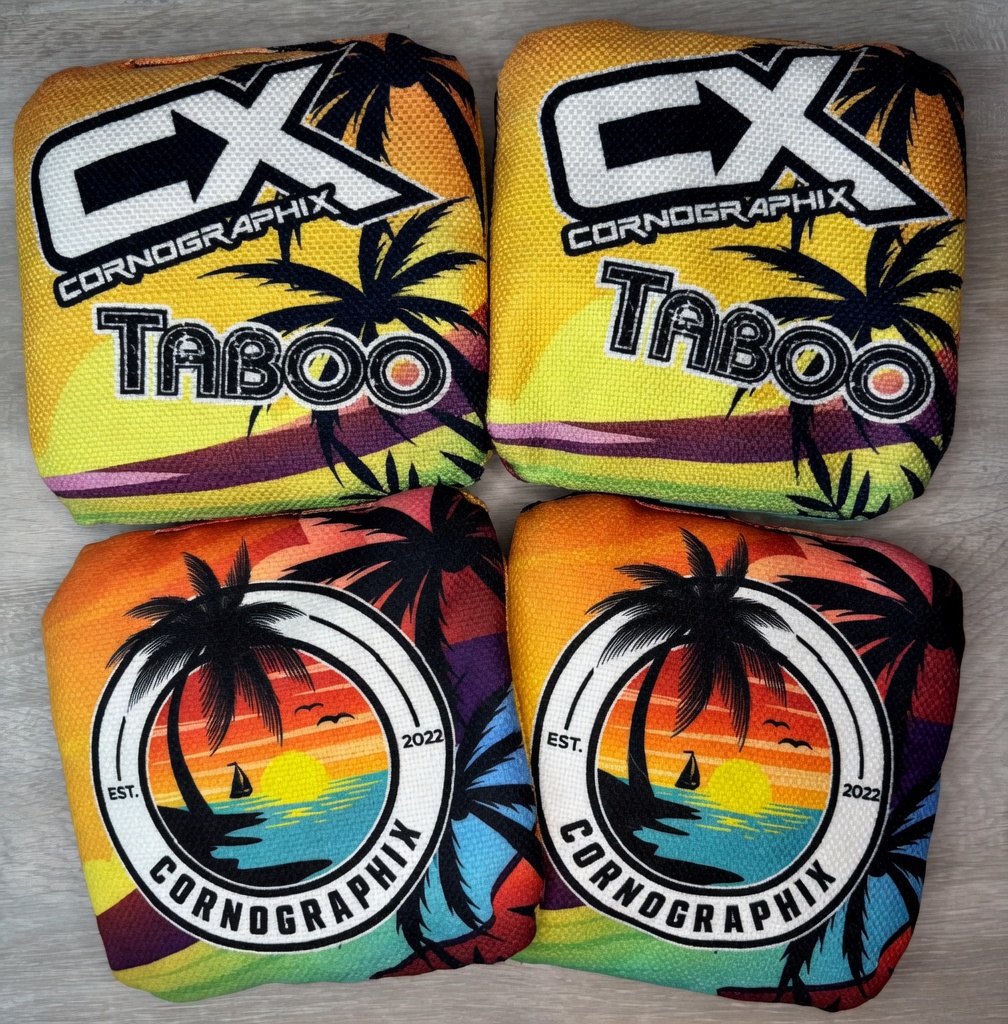
- Getting started: Taboo Cali (6/8) — forgiving, loose, great for learning the game
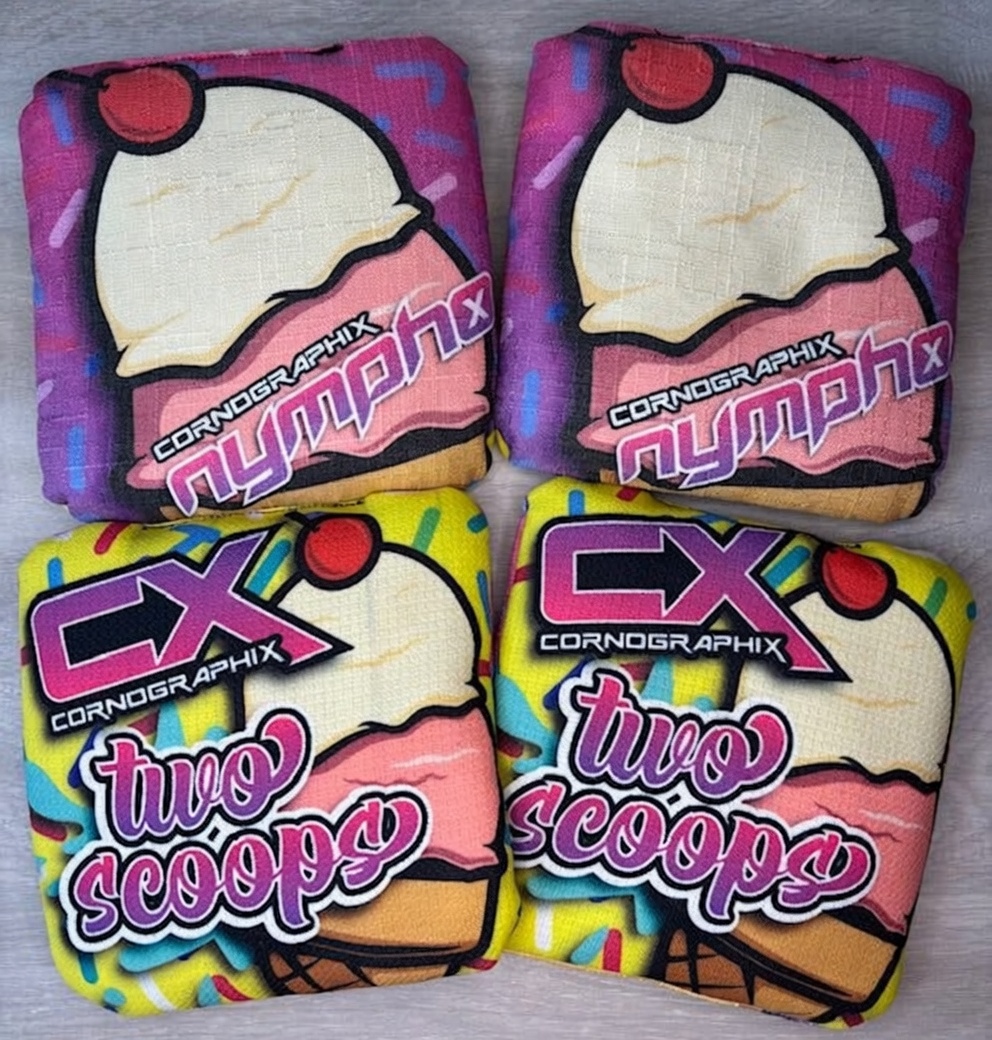
- Recreational to serious: Nympho Two Scoops (6/9) — versatile dual-fabric that handles most playing styles
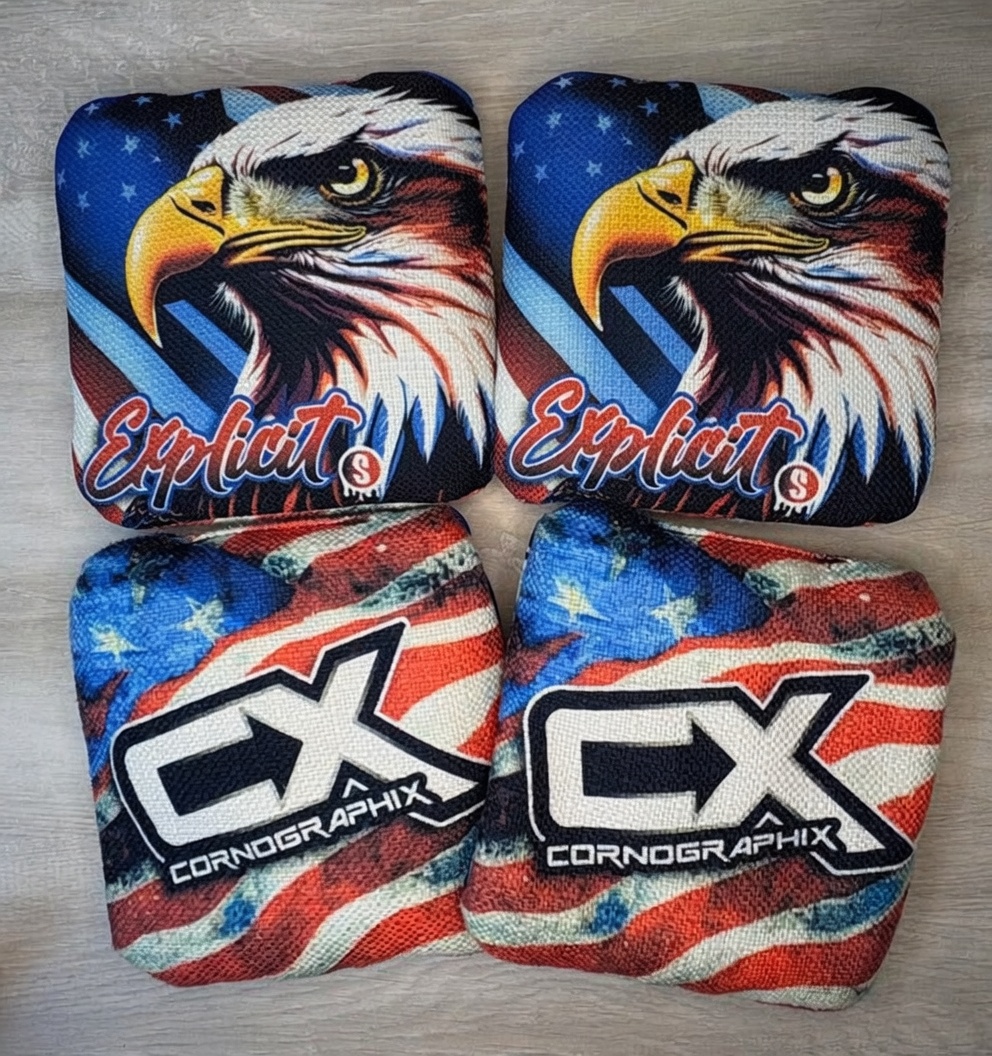
- Tournament ready: Explicit Liberty (7/9) — tied for the fastest rating in the lineup, built for precision at top speed
Bottom line: Pick the speed that matches your current throw, not where you want to be. The right bag makes you better faster than the aspirational bag.